

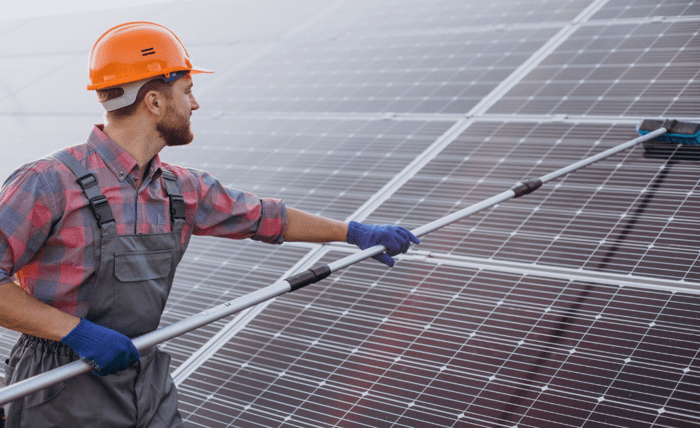
Investing in solar energy is smart, but protecting that investment requires little upkeep. While most solar systems are low-maintenance, they’re not maintenance-free. One overlooked factor that can quietly degrade performance over time is dustand debris. This buildup in dry, sunny regions can slash energy output and cut into long-term savings. That’s where routine solar panel cleaning comes in.
This post explores why regular cleaning matters, how it impacts performance, and the long-term consequences of skipping it, especially in areas prone to smog, soot, and air pollution.
1. Dirty Panels Produce Less Power
It doesn’t take much buildup to block sunlight. Even a thin layer of dust, pollen, or bird droppings can reduce solar efficiency by 5–20%. That means less power generation and potentially higher electric bills, all because of what’s sitting on top of your panels.
2. Climate Conditions Make a Big Difference
Homes in coastal, desert, or high-traffic urban areas are likelier to suffer performance drops due to airborne debris. In places like Encino, seasonal dryness and nearby wildfires can create a film of ash and grime that settles on panels. In these environments, skipping solar panel cleaning isn’t just neglect; it’s a financial drain.
3. Rain Isn’t Enough to Do the Job
While rain helps rinse loose dust, it rarely removes baked-on dirt or sticky substances like sap or bird droppings. Rain can sometimes leave behind mineral deposits or streaks that further block light. Manual cleaning is often needed to restore peak performance fully.
4. Ignoring It Can Lead to Permanent Damage
Long-term neglect can cause corrosion or staining on solar panels, especially if organic material like leaves or droppings sits in one place too long. What starts as an aesthetic issue can turn into a reduced lifespan and costly repairs. Regular solar panel cleaning helps preserve the integrity of the system.
5. Professional vs. DIY: What’s the Right Approach?
Cleaning solar panels isn’t as simple as pulling out the hose. Panels are delicate, and harsh chemicals, stiff brushes, or incorrect methods can cause damage. Professionals use deionized water, soft brushes, and safe access techniques, which are especially important for rooftop systems.
6. Performance Monitoring Only Tells Part of the Story
Most solar users rely on monitoring systems to detect performance drops, but these tools often don’t alert you to gradual efficiency loss caused by dirt. Owners often don’t notice a problem until months of lower output have passed. Proactive solar panel cleaning can prevent that silent dip in production.
7. Cleaning Frequency Should Be Based on Location
There’s no one-size-fits-all rule for cleaning frequency. Homes in leafy suburbs may only need it once or twice a year, while properties near construction zones, farmland, or major roads may require more frequent service. Regional factors should always guide your cleaning schedule.
8. Small Maintenance, Big ROI
It may not feel urgent, but regular cleaning can directly impact your return on investment. Solar systems are expected to last 25–30 years, but poor maintenance habits can shave years off their lifespan. A relatively low-cost routine can keep your system operating closer to peak capacity for the long haul.
Solar systems don’t need constant upkeep, but they do require occasional attention, and solar panel cleaning is one of the simplest, most effective ways to protect your energy output. In high-dust, high-sun areas, regular cleaning isn’t optional. It’s part of owning a system that’s built to last.