

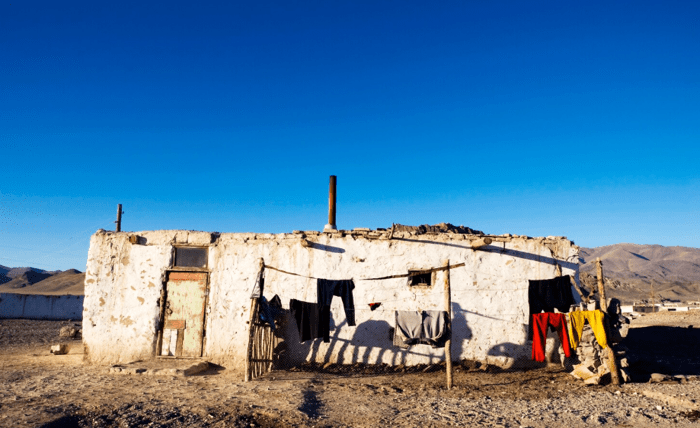
The United States is home to an estimated 500,000 abandoned mine sites, far outnumbering the country’s active operations, according to the federal Mine Safety and Health Administration. Many of these sites sit in western states, concentrated across landscapes that saw intensive extraction activity throughout the 19th and 20th centuries. What unites virtually all of them is the same pattern: production stopped, operators walked away, and the environmental and financial liabilities didn’t disappear with them. They compounded. What looks like a closed mine is often something more accurate described as a deferred cost, and in many cases, those costs are now landing on the public.
Understanding what drives those costs, and what makes them so difficult to contain once they’ve been set in motion, is increasingly important for any mining company, regulatory agency, or engineering team involved in active operations today. The industry has spent decades treating closure as a final-phase obligation. That framing has proven to be extraordinarily expensive.
Mine Closure Is No Longer a Final Phase
For most of the 20th century, mine closure was treated as an afterthought. A mine ran until it wasn’t profitable, the operator decommissioned equipment, and land reclamation happened, if it happened at all, on whatever timeline regulators could enforce. The result of that model is now visible across hundreds of thousands of sites nationwide, many of which are generating ongoing environmental damage with no financially responsible owner left to address it.
The International Council on Mining and Metals (ICMM) has been explicit in its updated guidance that this approach is no longer defensible. Their position is that mine closure is a dynamic and iterative process, one that considers environmental, social, and economic factors from the earliest stages of mine development, not from the point at which ore reserves are depleted. That’s a fundamental shift in how closure liability is framed, and it has real implications for how operations are engineered, permitted, and financed from day one.
The practical consequence of early closure planning is that it changes the entire cost profile of a mining project. Environmental obligations that are identified and designed for in advance tend to be far less expensive than those that are inherited by a skeleton operation or, worse, by a regulatory agency after bankruptcy. Water management infrastructure, tailings facility design, geotechnical stabilization, and land reclamation all carry dramatically different price tags depending on when they enter the planning process. When they’re integrated from the feasibility stage, they’re engineering problems. When they’re deferred until production stops, they become liability problems, and liability problems rarely get cheaper with time.
The Numbers Behind the Liability
The EPA and affiliated research groups estimate that cleanup liabilities for abandoned hardrock mine sites nationwide fall somewhere between $20 billion and $54 billion, according to figures cited by Earthworks. That’s an enormous range, and the uncertainty in that estimate itself reflects how difficult it is to assess contamination at sites that haven’t been systematically characterized. The figure also reflects liabilities that are, in many cases, already decades old. Many of the sites generating the highest remediation costs were abandoned without meaningful reclamation planning, without adequate bonding, and in some cases without any regulatory framework requiring either.
The bonding issue deserves particular attention. Governments now require companies to post financial assurance, typically in the form of bonds or bank guarantees, sized to cover estimated reclamation costs. The problem is that those estimates are frequently based on initial project assumptions that don’t account for the full scope of long-term water treatment obligations, evolving contamination footprints, or the remediation complexity that develops when a site has been allowed to deteriorate. When companies file for bankruptcy or simply abandon operations, whatever bonding existed is often insufficient to cover actual cleanup costs, and the gap becomes a public responsibility.
Water Is Almost Always the Longest Liability
Of all the categories of post-closure risk, water contamination is the one most likely to persist for generations. Acid mine drainage, the process by which water reacts with exposed sulfide minerals to produce highly acidic, metal-laden runoff, is one of the most stubborn environmental problems in the entire industry. It doesn’t stop when mining stops. It continues as long as water flows through disturbed rock, which at many sites means it continues indefinitely.
PBS reported that abandoned mine sites across the United States discharge roughly 50 million gallons of contaminated wastewater into U.S. watersheds every single day. The EPA’s documentation on abandoned mine drainage highlights arsenic, lead, cadmium, zinc, and selenium as common contaminants, all of which can migrate into drinking water supplies and aquatic ecosystems far downstream from the original site. The ecological damage those contaminants cause doesn’t stay neatly bounded at the mine boundary.
The Summitville Mine in Colorado offers one of the most documented examples of what happens when acid mine drainage isn’t planned for properly. Acid runoff from the site killed all biological life in a 17-mile stretch of the Alamosa River, according to Earthworks. The EPA designated the site a federal Superfund site, and remediation costs have exceeded $210 million. The Brohm mine in South Dakota was abandoned in 1998 and left the state with an estimated $40 million in reclamation costs, largely driven by drainage issues that weren’t adequately bonded. At the Zortman-Landusky Mine in Montana, drainage continued impacting local water quality long after the operator left. These aren’t edge cases. They’re illustrative of a recurring pattern in which water liabilities that were underestimated or ignored during operations became the dominant cost driver after the mine was no longer generating revenue.
What makes water treatment particularly challenging from an engineering standpoint is that it’s rarely a problem with a defined endpoint. A literature review summarized by the Coalition to Save the Menominee River found that no hardrock surface mine exists today that can demonstrate acid mine drainage can be stopped once it occurs on a large scale. For some sites, geochemical modeling indicates that drainage treatment will be required for hundreds to thousands of years. That’s not a reclamation task. It’s a perpetual operational obligation, and it needs to be treated that way in financial planning from the moment a mine is permitted.
What Tailings Failures Changed
The global conversation around mine closure engineering shifted dramatically in January 2019 when the Brumadinho tailings dam in Brazil failed catastrophically, killing 270 people and releasing approximately 10 million cubic meters of tailings waste into the surrounding watershed. The disaster wasn’t just a safety tragedy. It fundamentally altered the expectations investors, regulators, and the public now have around tailings management and long-term closure planning worldwide.
In the years following Brumadinho, the ICMM released its revised Integrated Mine Closure: Good Practice Guide, emphasizing that closure planning needs to be embedded throughout the full mine lifecycle rather than treated as a final deliverable. Financial assurance requirements for tailings facilities have tightened in multiple jurisdictions. Investors are scrutinizing closure readiness in ways they weren’t before. The cost of a tailings failure, when you account for liability, remediation, reputational damage, and regulatory response, dwarfs the cost of proper closure engineering.
Ground Doesn’t Forget
The physical hazards of abandoned underground mines extend well beyond water contamination. Underground voids left by past mining operations can remain structurally unstable for decades, collapsing suddenly and without warning as surrounding geology continues to shift, groundwater levels fluctuate, and the engineered or natural pillars holding the ground in place deteriorate. Mine subsidence has caused billions of dollars in property damage in the United States, according to AP News, and it’s created a significant public safety exposure that doesn’t correlate neatly with how old a mine is or how long it’s been inactive.
Pennsylvania has at least 5,000 abandoned underground mines, and the state’s Bureau of Abandoned Mine Reclamation has documented 578 subsidence events since 2017 alone. The state operates its own mine subsidence insurance program specifically because the occurrence is too common and too unpredictable to leave entirely to the private market. The AP News report on a December 2024 Westmoreland County sinkhole, which claimed the life of a 64-year-old woman who fell into an unmarked collapse above an old coal mine, brought renewed national attention to how real and immediate those risks remain. A professor from the Colorado School of Mines noted that the collapse appeared to result from the sudden failure of a mine roof that had been sagging for years, which is exactly the kind of deterioration that proper closure engineering, including void grouting, subsidence monitoring, and geotechnical assessment, is designed to identify and address before it reaches a surface expression.
Between 2000 and 2013, the U.S. Bureau of Land Management documented 381 deaths and 152 injuries at abandoned mine sites nationwide. That toll reflects falls, drownings, gas exposure, and collapses, all categories of risk that are substantially reducible through systematic reclamation and closure work. The mines generating those hazards didn’t become dangerous after they closed. They became dangerous because they closed without the engineering work necessary to make them safe.
The Cost Multiplier Nobody Wants to Discuss
There’s a compounding effect to deferred closure that rarely gets modeled accurately in early project planning. The longer post-closure obligations are delayed or underfunded, the more expensive they become, and the less likely they are to be covered by whoever originally held the permit. Remediation costs rise with inflation and with expanding contamination footprints. Groundwater contamination migrates outward over time, enlarging the treatment zone and increasing the complexity of the remediation. Tailings facilities that aren’t stabilized can experience erosion, cracking, or seepage that requires more extensive intervention the longer it’s left unaddressed. Regulatory standards evolve, meaning that a site characterized and bonded under the requirements of one decade may need to meet substantially more stringent standards by the time remediation actually begins.
The ICMM’s good practice guidance is explicit that closure costs need to be estimated periodically and updated throughout the mine lifecycle, not fixed at project inception and left to drift. That iterative approach exists precisely because the gap between initial estimates and actual costs has been documented consistently across the industry. Companies that integrate closure planning as a living component of mine management tend to carry better-calibrated financial assurance, face fewer regulatory surprises, and generate fewer legacy liabilities. Those that don’t tend to generate the kinds of sites now counted among the estimated 500,000 abandoned mines requiring federal and state remediation attention.
What Responsible Closure Engineering Actually Involves
Modern mine closure engineering is a multidisciplinary field that draws on hydrology, geotechnical analysis, environmental chemistry, regulatory compliance, and long-term site monitoring. It’s not a single deliverable produced at the end of mine life. It’s a framework that shapes how infrastructure is sited, how tailings are managed, how water is handled throughout operations, and how the land is ultimately reclaimed and stabilized.
Water management is typically the most complex and long-lived component. For sites with significant acid-generating potential, closure engineers need to assess the drainage chemistry, design appropriate treatment or passive management systems, and plan for monitoring obligations that may extend well beyond the financial life of the operating company. That planning has to be grounded in actual site-specific data, including mineralogical characterization, hydrologic modeling, and geochemical assessment, not generic assumptions about reclamation costs.
Geotechnical stability work addresses the underground and surface conditions that create long-term hazard after mining stops. For underground operations, that means assessing void geometry, pillar stability, and the influence of groundwater on structural integrity. For open pit and surface operations, it means evaluating pit wall stability, waste rock pile slope design, and the long-term behavior of reclaimed landforms under the hydrologic and climatic conditions of the specific site. Reclamation design brings all of those components together with the post-mining land use objectives agreed upon by the operator, regulators, and affected communities.
The financial assurance piece connects all of it. Sound closure engineering produces closure cost estimates that are defensible, traceable to specific work elements, and updatable as the mine evolves. That kind of rigorous planning is what protects operators from underestimating their obligations, what protects communities from inheriting liabilities, and what gives regulators confidence that a permitted operation is genuinely prepared for its eventual end.
The Industry Is Moving Toward Earlier Accountability
The direction of regulatory and industry practice is clear. Closure planning expectations are moving earlier in the mine lifecycle. Financial assurance requirements are tightening. Investor scrutiny around environmental liability disclosure is intensifying. Jurisdictions including British Columbia, New South Wales, and several U.S. states have updated their guidance on reclamation liability cost estimation in recent years, all in the direction of requiring more detailed, more frequently updated, and more conservatively estimated closure cost documentation.
That trajectory creates a meaningful distinction between mining operations that have integrated closure planning from the outset and those that haven’t. The former are better positioned to meet evolving regulatory expectations, more accurately financed against their actual long-term obligations, and less likely to generate the kind of legacy contamination and infrastructure failure that defines the country’s existing inventory of abandoned sites. The latter are producing tomorrow’s liability headlines.
The 500,000 abandoned mines already in existence represent decisions made by prior generations of operators and regulators who treated closure as someone else’s problem. The technology, the regulatory framework, and the engineering discipline to do better are all available now. The question is whether they’re being applied early enough to prevent the same pattern from repeating.