

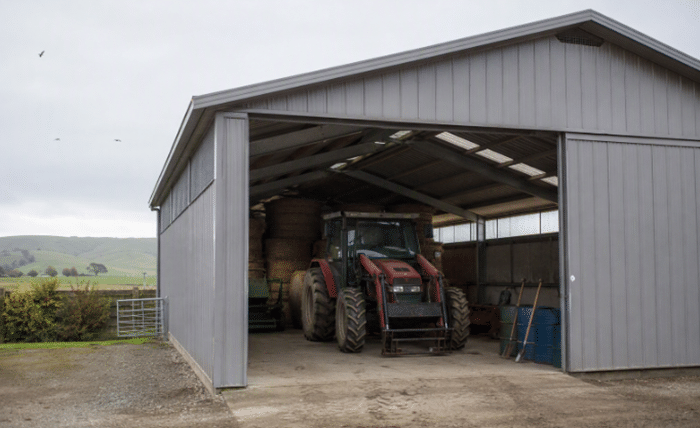
Birds in a farm shed can seem like little more than an everyday nuisance. A few sparrows on the framing or starlings around stored feed may not look like a serious problem, particularly when there are bigger jobs competing for your attention.
The real trouble starts when birds roost in the roof space. Up there, their droppings fall on everything stored below: feed and water, machinery, vehicles and equipment. Bird droppings are also acidic, so over time they can eat into paintwork and finishes, adding to cleaning and repair costs. Nests in the rafters create maintenance problems of their own, and wild birds add another variable to your farm biosecurity.
That’s why a bird-proof shed isn’t about keeping every bird out. Birds may still come in through an open door and sit on the wall framing, where their droppings do little damage. What matters is that the roof space gives them nowhere to perch or roost, so nothing is overhead dropping onto what you’ve stored below.
This article explains why bird-proofing matters, where problems commonly begin, and the practical steps you can take to stop birds settling in your shed’s roof space.
Why birds choose farm sheds
A farm shed can offer almost everything a bird needs: shelter from wind and rain, protection from predators, nesting ledges and, depending on how the building is used, easy access to food and water.
Traditional roof structures can provide numerous sheltered perching and nesting locations. Once birds discover a safe spot, simply removing a nest may not solve the problem. If the underlying access and roosting opportunities remain, birds can return or new ones can take their place.
This is why prevention starts with the building itself. When looking at rural sheds in NZ, for example, it is useful to consider how the roof and rafter configuration reduces potential nesting locations rather than treating bird control as something to add after construction.
The surrounding area matters too. Spilt grain, uncovered feed, standing water and accumulated debris can all make the site more attractive. New Zealand’s Ministry for Primary Industries (MPI) recommends deterring birdlife and other pests by removing spilt feed, standing water and debris around animal areas.
The hidden costs of allowing birds to settle
The most obvious sign of a bird problem is droppings on floors, vehicles and equipment. But the real cost is the damage birds and their droppings do to the assets stored inside your shed
| Issue | Potential impact on your farm |
| Droppings | More cleaning of floors, machinery and stored equipment + acidic bird droppings leading to corrosion and paint damage |
| Nesting material | Blocked areas and additional maintenance around building components |
| Feed access | Waste and potential contamination |
| Water access | Greater chance of faecal contamination |
| Regular bird traffic | More ongoing pest-control work |
| Roosting above assets | Soiling of machinery, vehicles and stored materials |
Biosecurity deserves particular attention. MPI advises farmers to keep stored feed covered and to design and position feeding and watering systems to reduce faecal contamination. It also identifies wild or feral animals as potential routes for introducing pests and disease onto farms.
The issue has become even more relevant in New Zealand following the detection of H5 bird flu in the country in July 2026. MPI notes that bird flu can spread through direct contact with infected birds and indirectly through contaminated water, feed, equipment, materials and surfaces. For livestock farms, MPI currently considers transmission from birds to cattle and other livestock to be low risk, but still recommends strong on-farm biosecurity and limiting exposure to wild birds and contaminated environments.
That does not mean every bird in your machinery shed represents a disease threat. It does mean that reducing unnecessary contact between wild birds, feed, water and farm assets is sensible preventative management.
Why shed design matters
Trying to discourage birds after they have established nesting sites can become a recurring job. A better approach is to remove as many convenient nesting and perching locations as practical from the beginning.
The roof structure deserves particular attention. Exposed ledges, cavities and sheltered horizontal surfaces can create ideal nesting spots. Designs that minimise these areas make it harder for birds to establish themselves.
That is one reason purpose-designed rural sheds from Alpine Buildings use a bird-proof rafter system intended to eliminate nesting locations within the roof structure. Regardless of supplier, the broader principle is worth remembering: structural bird-proofing can reduce reliance on reactive measures later.
When assessing a shed, look beyond whether birds can physically fly through the front opening. Ask where they can settle once inside.
Common problem areas include:
- A frame roof trusses
- I beam steel rafters
- C section purlins
- Shed designs where the purlins sit on the rafters instead of between them
- Apex braces
- Knee braces
A large doorway may need to remain open for machinery access, so completely sealing an agricultural shed is not always realistic. Removing attractive nesting and roosting locations can therefore be more practical than attempting to exclude every bird at every moment.
Practical ways to bird-proof an existing shed
If your shed is already built, start by identifying where birds enter, perch and nest. Watch the building at different times of day rather than relying only on what you see during a quick inspection.
From there, practical measures may include:
- Seal unnecessary gaps. Repair holes and close openings that serve no operational purpose.
- Protect ventilation points. Appropriate mesh or netting can prevent bird access while maintaining airflow.
- Remove abandoned nesting material safely. Check that nests are no longer active and consider relevant wildlife requirements before removal.
- Limit comfortable perches. Where suitable, physical deterrents can make frequently used ledges less appealing.
- Protect feed stores. Keep feed covered and deal with damaged containers promptly.
- Remove water sources. Fix leaks and avoid leaving unnecessary standing water around the shed.
- Clean consistently. Removing droppings and nesting material helps prevent the shed becoming an established roosting environment.
- Install bird brush or spikes on any surface or ledge a bird can land on
- Install laser lights to deter nesting birds
For poultry operations in particular, MPI recommends securing sheds against wild-bird entry, including using netting on access points such as vents where possible. Its commercial poultry biosecurity guidance also recommends cleaning up feed spills and removing standing water that could attract wild birds.
Good housekeeping is part of bird control
Bird-proofing hardware will only go so far if your shed provides a reliable food source.
Imagine sealing several roof gaps while leaving spilled grain around a storage area every afternoon. You have made access slightly harder, but you have left the reward in place.
A simple routine can make the building less attractive:
- clean up feed spills promptly
- store feed in covered, secure containers
- avoid leaving water where birds can drink or bathe
- keep rubbish and debris away from shed walls
- inspect for new nests before they become established
- include high ledges and beams in cleaning schedules.
MPI’s general farm biosecurity guidance specifically recommends keeping areas around pens free of debris, spilt feed and standing water. These are inexpensive measures, but they support the physical bird-proofing built into your shed.
What to consider when planning a new shed
If you are building rather than retrofitting, bird prevention can be considered alongside machinery access, bay dimensions, ventilation and storage capacity.
Ask your shed designer questions such as:
| Question | Why it matters |
| Where could birds perch or nest? | Identifies problems before construction |
| Are there exposed roof ledges? | These can become recurring roosting points |
| How will ventilation openings be protected? | Airflow should not automatically mean unrestricted bird access |
| Where will feed be stored? | Feed can attract birds into otherwise clean sheds |
| Can high surfaces be accessed for cleaning? | Easier maintenance encourages regular cleaning |
| Where will water collect around the shed? | Standing water can attract birds |
Think about the shed as a working system rather than simply a roof over equipment. Its structure, storage layout and day-to-day management all influence how attractive it becomes to birds.
Making bird-proofing part of routine farm management
A bird problem rarely appears overnight. More often, one convenient perch becomes a regular roost, a nest appears in a quiet corner, and before long cleaning around droppings feels like another permanent farm job.
Regular inspections can catch these problems early. Check rafters, eaves, vents and sheltered areas whenever you carry out general shed maintenance. Look for droppings, feathers and fresh nesting material, as these can indicate where birds are becoming established.
It is also worth reassessing your shed when its use changes. A machinery shed that begins storing feed, for example, may suddenly become far more attractive to birds.
Bird-proofing ultimately works best as prevention rather than pest control. By reducing nesting opportunities, protecting feed and water, maintaining good housekeeping and considering bird access during shed design, you can reduce contamination and unnecessary maintenance while strengthening everyday farm biosecurity.
A farm shed should protect what you put inside it. Making sure birds do not turn the roof space into their own permanent accommodation is a small detail that can make that protection much easier to maintain.