

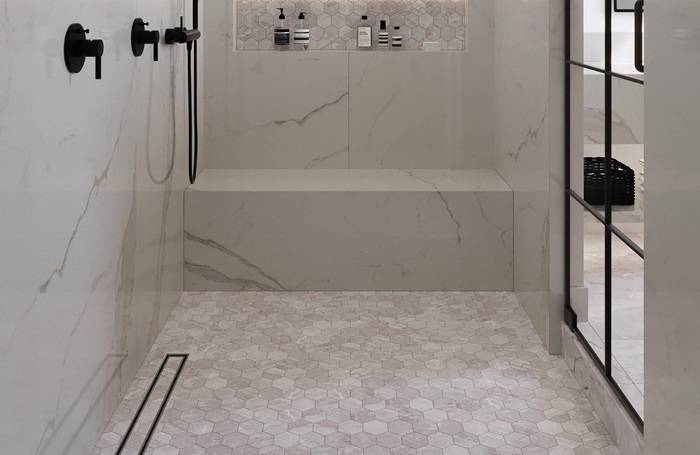
Surfaces, both inside and outside, have a significant impact on how a room feels, but if they are solely considered utilitarian components, they may quickly become visually predictable. By adding pattern, texture, movement, and artistic detail, thoughtful surface design may alter that perspective. Because they enable a surface to become a part of the broader design rather than just serving as its backdrop, mosaic tile patterns are very effective.
Mosaic tiles may add individuality and dimension to otherwise plain surfaces with proper design. The arrangement, size, spacing, texture, and relationships between individual pieces all contribute to their visual effect in addition to color.
Creating A Design Element Out Of A Surface
A simple surface often serves its functional purpose without adding much aesthetic appeal. Mosaic designs provide a chance to give the same space greater purpose. Smaller pieces are arranged repeatedly to produce intricacy that naturally draws attention and draws the viewer’s eye over the surface.
Depending on the pattern used, this method might be subtle or visually striking. While a more complex composition might make the surface a significant focal point, a restrained arrangement can provide subtle subtlety. The secret is to make sure the pattern enhances the overall ambiance rather than clashing with the surrounding design aspects.
Using Pattern To Create Movement
The capacity of mosaic design to evoke a feeling of movement is one of its most intriguing features. The way the eye moves over a surface may be affected by directional lines, curves, repeating forms, and progressive pattern changes.
When a vast space could otherwise appear flat or visually heavy, movement is extremely helpful. While preserving continuity over the whole surface, a well-designed mosaic pattern may disperse that visual weight.
The pattern’s orientation is also important. While vertical designs might direct attention upward, horizontal groupings can highlight breadth. A softer visual experience may be achieved with more fluid patterns without giving the surface an unduly structured appearance.
Developing Visual Rhythm Via Repetition
Rhythm is produced by repetition, and rhythm lends order to a surface. Repetition is inherently beneficial to mosaic designs as separate pieces may combine to form a more cohesive, broader composition.
A serene and balanced effect may be achieved by repeating shapes and maintaining consistent spacing. Greater visual energy may be produced by more diversified arrangements. The surface’s relationship to the surrounding environment determines the intended impact.
Repetition should seem intentional, not robotic. A patterned surface may be kept cohesive while avoiding visual monotony by making minor adjustments to tone, texture, or placement.
Harmonising Pattern And Colour
The efficacy of a mosaic design is strongly influenced by color. The interaction between colors becomes more significant when many tones are used in a sophisticated arrangement.
A restricted palette may make it possible to focus more on the pattern’s structure. The surface may seem more dynamic and expressive with greater color diversity. Neither strategy is inherently superior. The desired visual function of the surface determines the best option.
While closely comparable tones might provide smoother transitions, contrast can also better distinguish distinct forms. Taking color and pattern into account together ensures that the final surface seems cohesive.
Using Texture To Add Depth
Color need not be the only factor in a pattern. By altering how light interacts with the surface, texture may provide an additional level of visual appeal. Throughout the day, different finishes may have an impact on apparent depth, shadow, and reflection.
Even a reasonably simple design may take on more depth when texture is carefully added. The design has a more dynamic quality since the surface may seem different depending on the lighting and viewing angles.
Because of this, texture becomes a crucial factor in the design process rather than something that should only be assessed after a pattern has been chosen.
Keeping Balance And Proportion
Proportion must be carefully considered while creating intricate mosaic patterns. When applied elsewhere, a design that seems balanced on one surface could seem too sparse or thick.
Each piece’s scale should naturally correspond to the surface’s dimensions. In order to prevent the mosaic from seeming detached from the larger design, surrounding architectural elements should also be taken into account.
Perfect symmetry is not always necessary for visual balance. Rather, it results from the deliberate distribution of pattern, color, texture, and negative space.
Increasing The Meaning Of Surface Design
Without the need for superfluous adornment, mosaic patterns provide a means of turning useful surfaces into unique visual elements. The combination of tiny elements that together provide texture, rhythm, depth, and movement is what gives them their power.
It takes more than just choosing a lovely pattern to create a successful mosaic design. The final product is influenced by scale, proportion, color, texture, spacing, and surrounding objects. An average surface may become an integrated and memorable component of the overall design when these elements come together.